
Why the US Government Banned Claude Fable 5 in Three Days
Anthropic launched its most powerful public model on June 9, 2026 and a US export-control order forced it offline three days later. Here is what happened to Claude Fable 5 and what it means for anyone building on frontier AI.

MCP Nedir ve AI Entegrasyonunu Nasıl Değiştiriyor
Anthropic'in geliştirdiği Model Context Protocol 97 milyon kuruluma ulaştı. MCP'nin AI agent ekosistemini nasıl dönüştürdüğünü ve işletmelere ne sunduğunu inceliyoruz.

Samsung Galaxy S26 Turns Your Phone Into an AI Agent
Samsung Galaxy S26 combines Bixby, Gemini, and Perplexity in a multi-agent AI architecture that redefines what a smartphone can do. We explore its agentic AI features, Privacy Display, and privacy trade-offs.
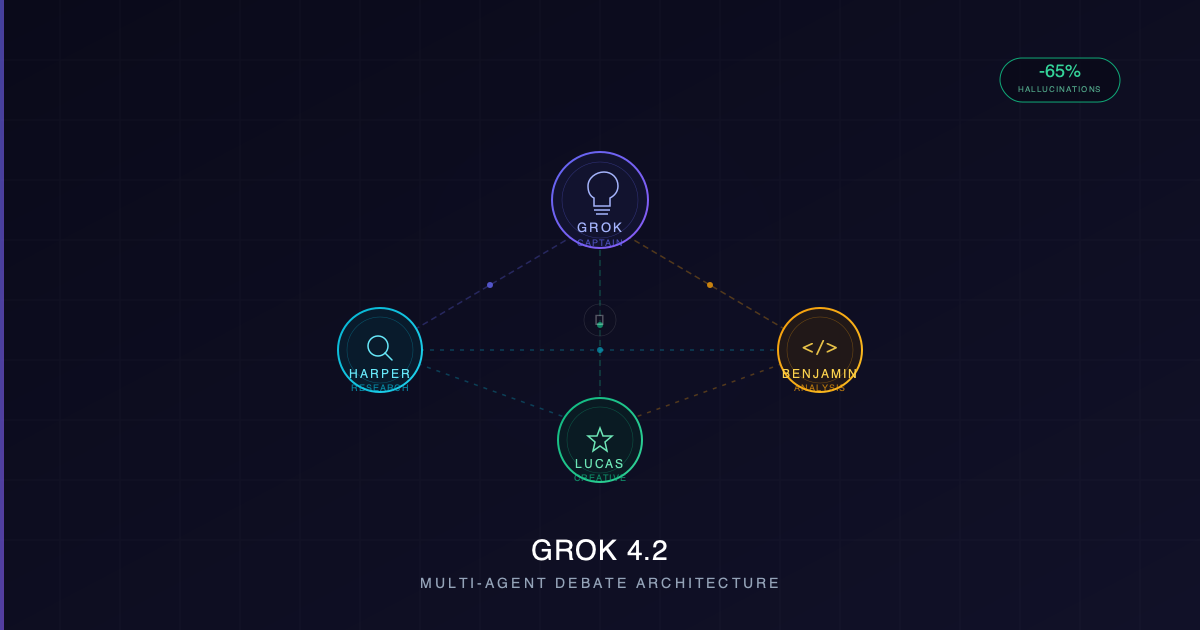
Grok 4.2: The Multi-Agent AI That Debates Itself
xAI's Grok 4.2 replaces the single-model approach with four specialized AI agents that debate in real-time — cutting hallucinations by 65% and redefining how frontier models work.
Google I/O 2025: Gemini 2.5 Pro, AI Mode, and Jules Code Agent
Google I/O 2025 featured Gemini 2.5 Pro model, AI Mode in Google Search, and the Jules AI coding agent. AI integration deepens across all Google products.
OpenAI o3 and o4-mini: Tool-Using Reasoning Models
OpenAI released o3 and o4-mini reasoning models that can use web browsing, code execution, and file analysis tools during the thinking process.
Meta Llama 4 Scout and Maverick: 10 Million Token Context with MoE Architecture
Meta's Llama 4 model family introduces Scout (17B active params, 10M context) and Maverick (17B active, 128 experts). Open source AI reaches new heights.
Claude 3.7 Sonnet: The First Hybrid Reasoning Model with Extended Thinking
Anthropic released Claude 3.7 Sonnet, the world's first hybrid reasoning model. Extended thinking mode combines fast responses with deep reasoning capability.
xAI Grok 3: Elon Musk's 200K GPU Supercomputer Trained Model
xAI released Grok 3, trained on the Colossus supercomputer with 200,000 GPUs. It claims the top spot on several AI benchmarks.
DeepSeek R1: The Chinese Open Source Model That Shook the AI World
Chinese AI startup DeepSeek released R1, a reasoning model rivaling OpenAI o1. Trained for a fraction of the cost, it sent shockwaves through global markets.
OpenAI's 12 Days of Shipmas: o1, Sora, Canvas, Projects, and More
OpenAI ran a '12 Days of Shipmas' campaign in December, announcing a new product each day. o1 full model, Sora public release, and ChatGPT Pro were major highlights.
Gemini 2.0 Flash: Google's New AI Model Built for the Agentic Era
Google released Gemini 2.0 Flash, an AI model designed for the agentic era. Native tool calling, code execution, and multimodal output capabilities stand out.
Claude Can Now Use Your Computer: Anthropic Introduces Computer Use API
Anthropic introduced a Computer Use API for Claude. The AI model can now directly control the screen, keyboard, and mouse to perform tasks on computers.
OpenAI o1: The AI Model That Thinks Before Answering
OpenAI's new o1 model introduces the "chain-of-thought reasoning" paradigm. It achieves PhD-level results in math and science by thinking step-by-step.
Llama 3.1 405B: The World's Largest Open Source AI Model
Meta released Llama 3.1 405B, the world's largest open-source language model. It rivals GPT-4 and Claude 3.5 Sonnet in performance.
Claude 3.5 Sonnet: Surpasses GPT-4o and Opus at Lower Cost
Anthropic's Claude 3.5 Sonnet surpasses both GPT-4o and Claude 3 Opus in many benchmarks while being 5x faster and 80% cheaper than Opus.
Google I/O 2024: Project Astra, Gemini 1.5 Pro, and the Full AI Transformation
Google I/O 2024 was dominated by AI with Gemini 1.5 Pro's 1 million token context window, Project Astra real-time AI agent, and Gemini integrated into all products.
GPT-4o: OpenAI's Omni Model Processes Text, Audio, and Vision Together
OpenAI's new model GPT-4o can natively process text, audio, and visual inputs simultaneously. Response time has dropped to 232 milliseconds.
Meta Releases Llama 3: New Standard in Open Source AI
Meta's Llama 3, released in 8B and 70B parameter versions, sets new standards in the open source AI world. The 405B model is also on the way.
Anthropic Launches Claude 3: Opus, Sonnet, and Haiku Model Family
Anthropic's Claude 3 model family offers three different models at varying price and performance tiers. Claude 3 Opus surpasses GPT-4 in several benchmarks.
Google Bard Officially Becomes Gemini: The AI Wars Heat Up
Google has renamed its AI chatbot Bard to Gemini. A Gemini Advanced subscription and mobile app were also announced.